ACI CHAIRMAN SEYİT ARDIÇ:
“KEEPING INDUSTRIALISTS STANDING MEANS SECURING THE FUTURE OF OUR COUNTRY”
“PRODUCTION CONTINUES, BUT THE FUTURE OF PRODUCTION IS BEING DEPLETED”
“INDUSTRIALISTS ARE GIVING WHAT THEY EARN THROUGH THEIR HARD WORK TO INTEREST”
“A HEALTH INDUSTRY PRESIDENCY SHOULD BE ESTABLISHED”
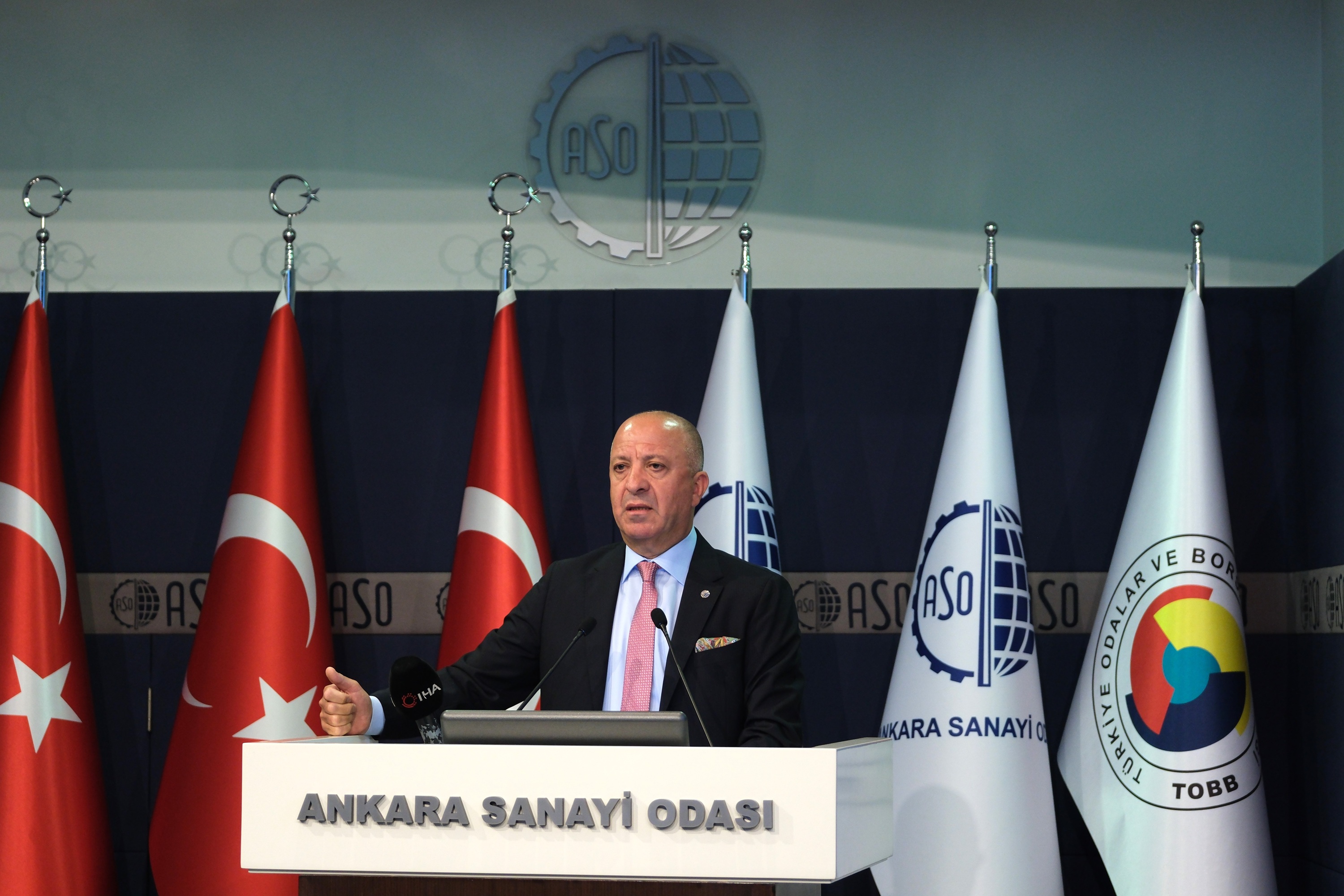
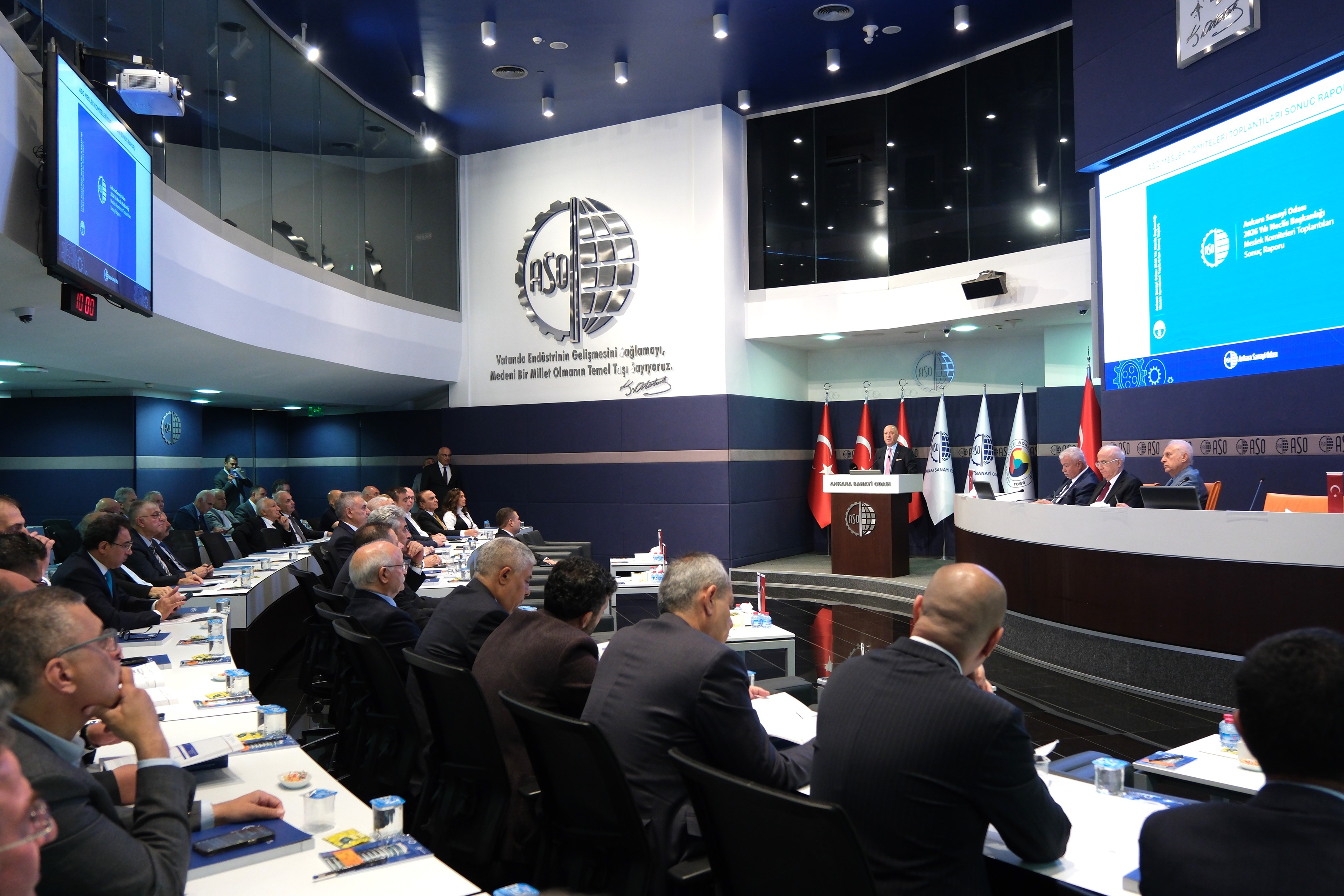
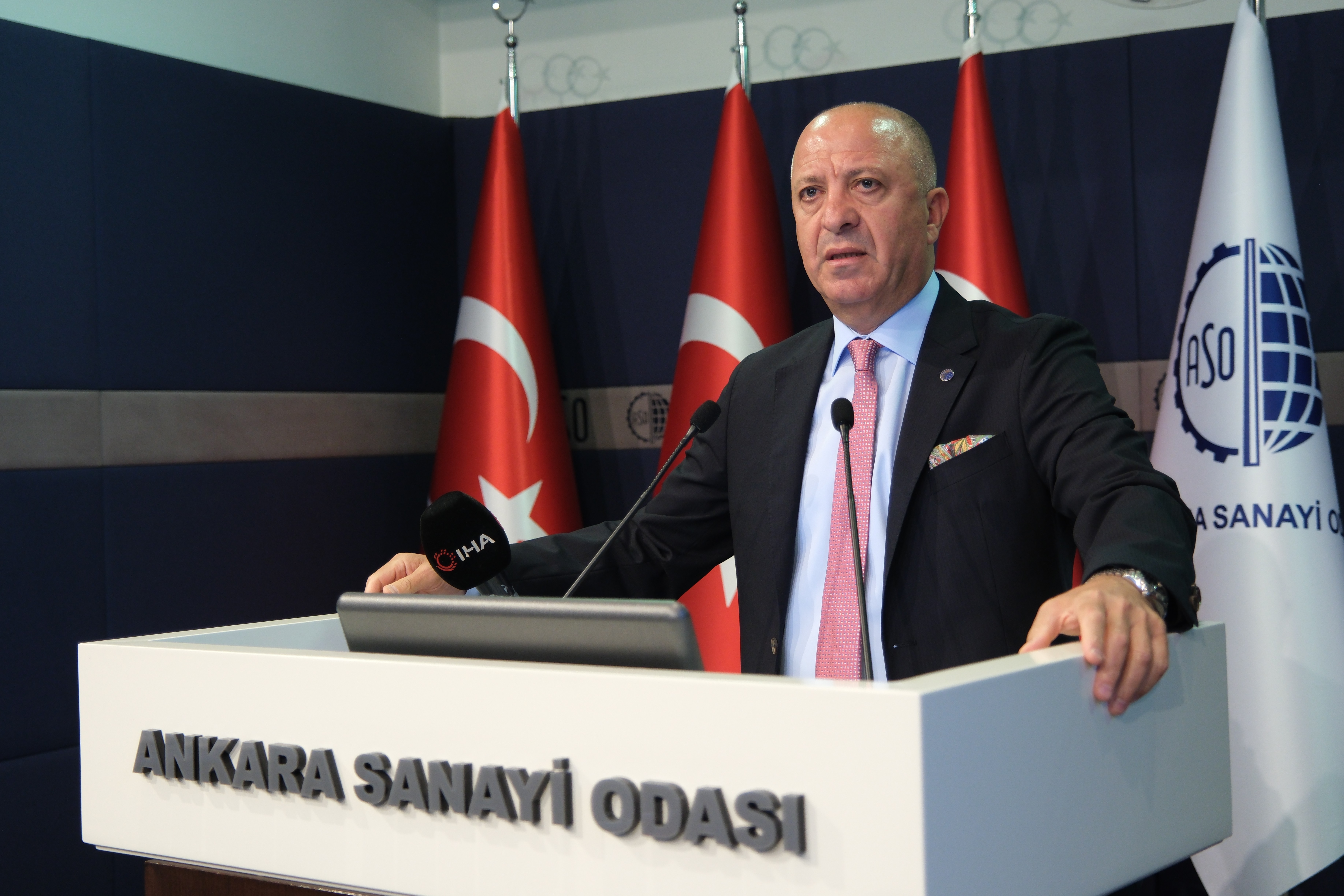
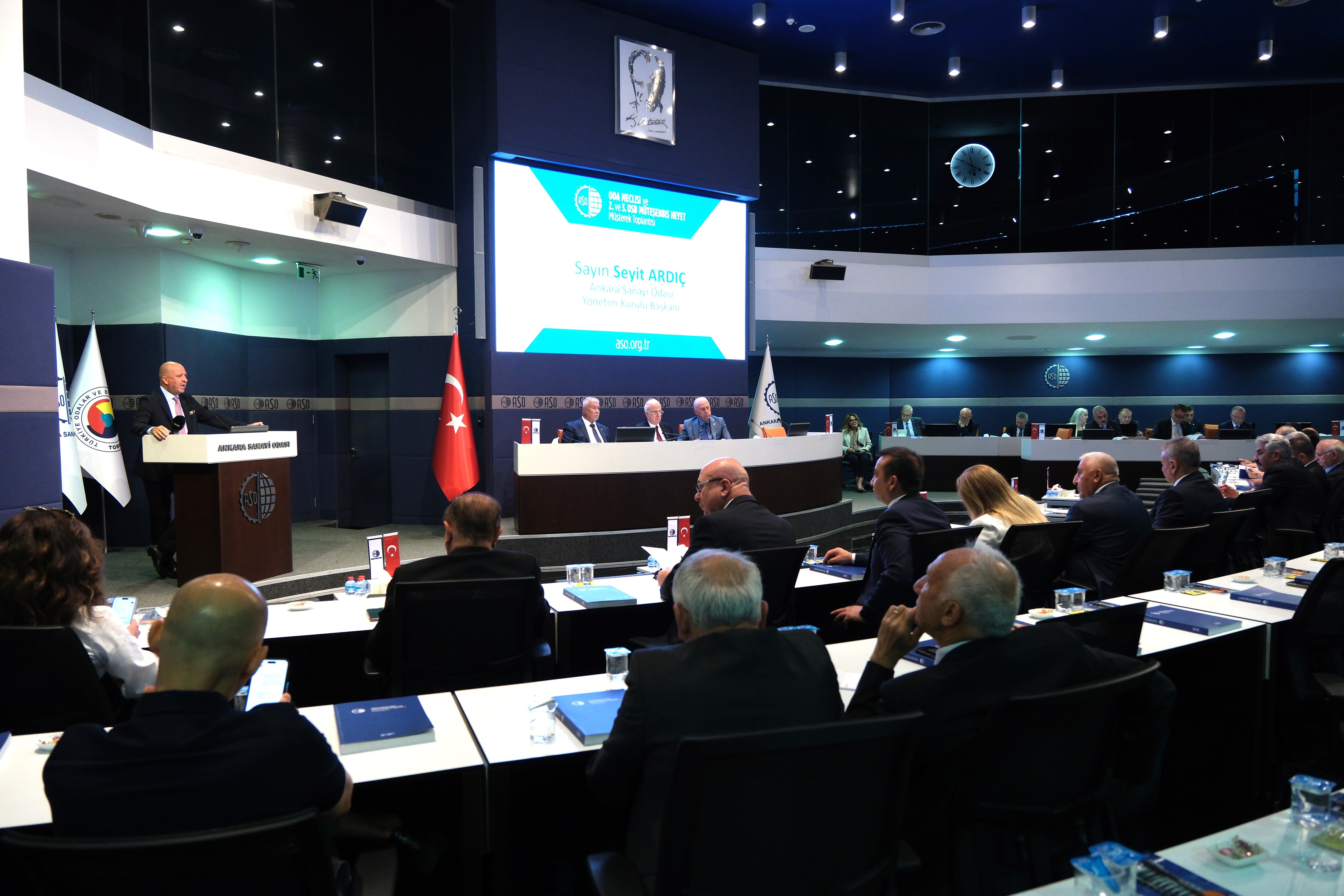
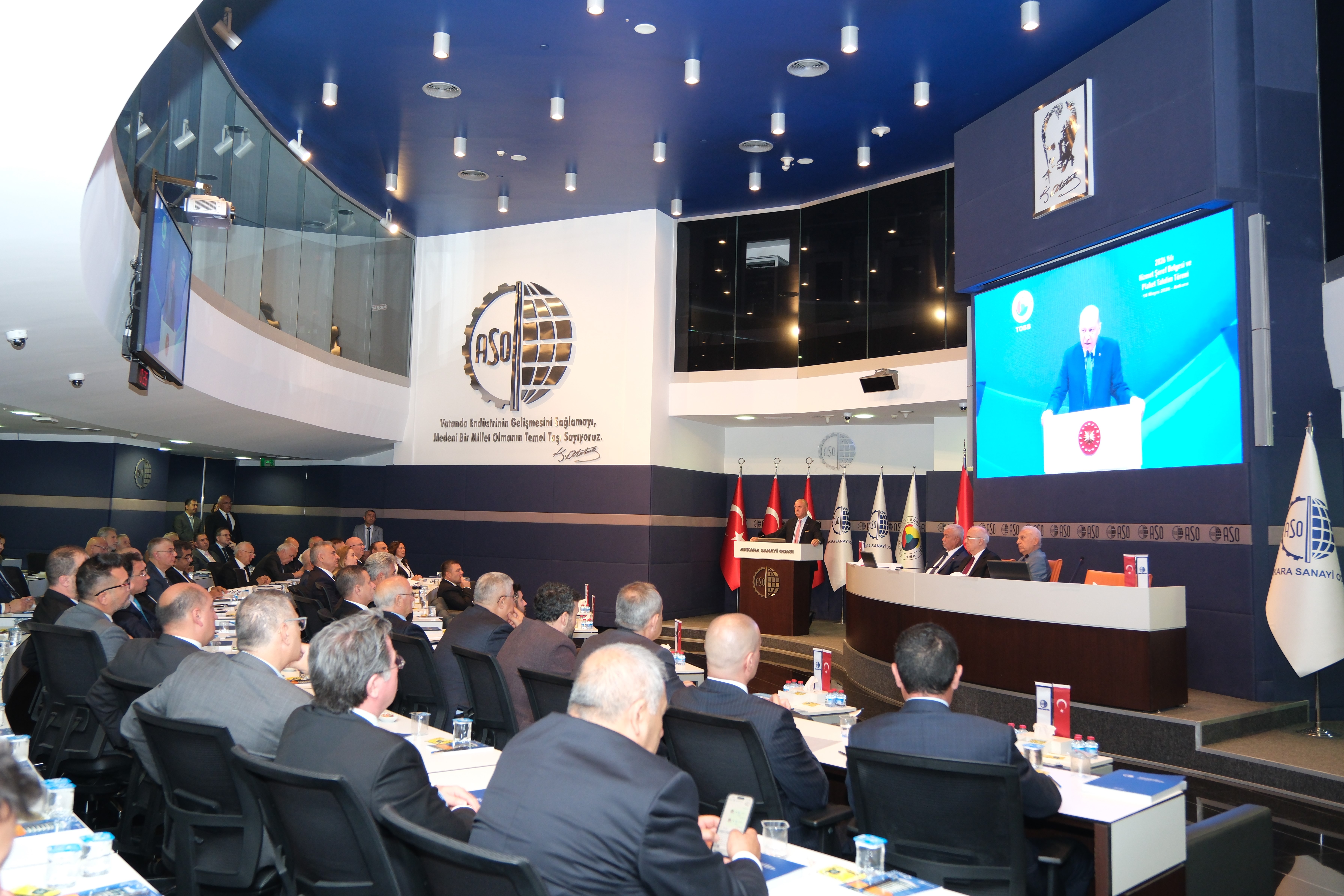
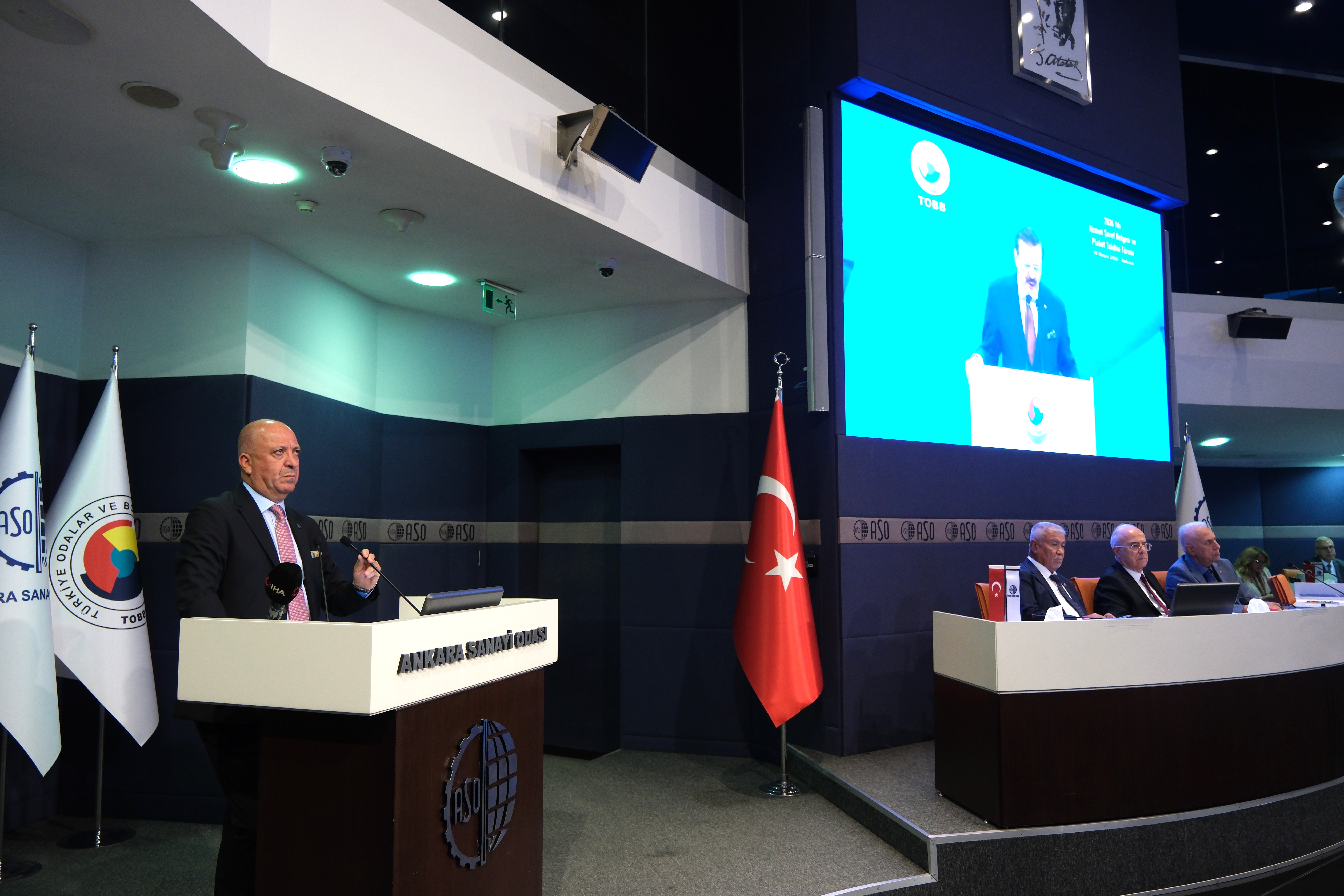
The June Assembly Meeting of the Ankara Chamber of Industry (ACI) was held under the chairmanship of ACI Assembly President Celal Koloğlu. In his speech, ACI Chairman of the Board Seyit Ardıç evaluated current economic developments and conveyed the demands, expectations, problems and solution proposals of industrialists.
ACI Chairman Seyit Ardıç began his speech by congratulating ACI Assembly Member Özgür Bayraktar, who was appointed as Deputy Chairman of the Nationalist Movement Party. Chairman Ardıç said, “Despite the intense responsibility he has assumed in his new position, I find it extremely valuable that he will continue to contribute to the work of our Chamber and closely follow the agenda of our industry. I once again congratulate my esteemed industrialist colleague Mr. Özgür Bayraktar and wish him success in this important duty.”
“OUR COMMITTEES ARE THE VOICE OF ANKARA INDUSTRY IN THE FIELD”
Chairman Ardıç stated that they comprehensively evaluated the expectations, problems and solution proposals of the sectors at the Professional Committee Meetings, the second of which were held in February and March this year, and said, “We regard every opinion coming from our committees as the voice of Ankara industry in the field.” Noting that all evaluations made at the meetings will be compiled into a report and shared with the relevant public institutions, Chairman Ardıç said, “In our management approach, listening to problems alone is not enough; what matters is producing solutions and achieving results. Within this scope, we evaluated one by one the demands expressed by our members at the Joint Meeting of Professional Committees we held last month; we quickly initiated our official efforts on six issues falling within the duties and authority of public institutions and informed our relevant members in writing. We are closely following the processes.”
Referring also to developments on the global agenda, ACI Chairman Ardıç stated that the transfer of the U.S.–Iran tension to the diplomatic table was an encouraging development. Emphasizing that lasting peace depends on the steps taken finding a response on the ground, Chairman Ardıç said, “The fact that this process, which creates uncertainty in a wide range of areas from energy supply security to trade routes, is being addressed through diplomacy rather than weapons is itself a gain for global stability. I hope that peace, stability and cooperation will replace conflicts in our region and around the world.”
“INDUSTRY, PRODUCTION AND TECHNOLOGY ARE AT THE CENTER OF THE TRANSFORMATION”
Stating that the perception of risk in the global economy remained strong in the first half of the year, Chairman Ardıç made the following assessment:
“The deepening of geoeconomic and political fragmentation makes economic decision-making processes more fragile. Protectionism is rising, capital is becoming more selective, and energy and logistics costs are becoming more sensitive than ever to geopolitical tensions.
The real issue, however, goes beyond these fluctuations. Today, looking only at growth figures, inflation rates or central banks’ interest rate decisions is not enough to understand the global economy. Because a much deeper transformation is taking place in the world, and at the center of this transformation are industry, production and technology.”
Pointing out that China, which had only a 3 percent share in global manufacturing industry in 1990, now accounts for nearly one-third of global production on its own, Chairman Ardıç said, “In the same period, the share of the United States declined from 23 percent to 16 percent, Japan’s share from 13 percent to 5 percent, and Germany’s share from 9 percent to 4 percent. Türkiye’s share, on the other hand, was 0.86 percent in 1990 and has only been able to reach around 1.3 percent today. In other words, although we have increased our production capacity, we have not yet achieved the desired leap on a global scale.”
“AN ECONOMY WITHOUT INDUSTRY IS LIKE A ROOTLESS TREE; IT FALLS IN THE FIRST STORM”
Stating that when the location of production changes, the center of power also changes, Chairman Ardıç continued as follows:
“The production order that was once under the control of the Atlantic world has today largely shifted to the Asia-Pacific axis. China has become the world’s production center with its economies of scale, state support, access to energy, logistics capacity, technology investments and long-term industrial policy. Moreover, the world is now entering a new industrial age, and in this age, cheap labor alone is no longer the determining factor. Access to energy, the capacity to produce technology, artificial intelligence, data dominance and access to critical raw materials are becoming the key determinants of the new era. That is why industry is once again a matter of state policy today. Countries that yesterday told us ‘the market solves everything’ are today mobilizing billions of dollars in public resources to keep their own industries standing, from chips to batteries, from defense to artificial intelligence. Because everyone has seen that a country without industry cannot sustain its economy, diplomacy or defense for long. An economy without industry is like a rootless tree; no matter how majestic its trunk may appear, it falls in the first strong storm.”
“PERMANENT GROWTH COMES FROM PRODUCTION, NOT CONSUMPTION”
Chairman Ardıç stated that the Turkish economy has entered the second half of the year at a decisive threshold in the disinflation process and said, “We had long been observing in the field that industry was paying the heaviest price for the tight monetary and fiscal policies implemented to fight inflation and ensure macroeconomic stability. The announced data confirmed our assessment. In the first quarter of 2026, growth remained below expectations at 2.5 percent; the fact that growth was close to zero compared to the previous quarter indicates a significant loss of momentum in the economy.”
Recalling that the industrial sector, which made a strong contribution to growth in the second and third quarters of 2025, slowed to 0.9 percent in the final quarter and turned into contraction in the first quarter of 2026, with industrial production shrinking by 0.8 percent and pulling growth downward, Chairman Ardıç said, “The economy is growing; but this growth relies more on consumption than production. While domestic consumption carries growth, industry, investment and exports are weakening. The contraction in exports, the loss of momentum in investments and the decline in industrial production are serious warnings in terms of the quality of growth. Permanent growth, however, comes from production, not consumption. Therefore, the source from which growth is fed is now just as important as the growth rate itself.”
“INDUSTRIALISTS ARE GIVING WHAT THEY EARN THROUGH THEIR HARD WORK TO INTEREST”
Explaining that the loss of momentum in industry is also clearly visible in companies’ balance sheets, Chairman Ardıç said, “The real breaking point is manifesting itself in companies’ financial structures, profitability and financing burdens.”
Evaluating the results of Türkiye’s Top 500 Industrial Enterprises Survey, Chairman Ardıç said:
“Our industry continues to produce, export and remain the main pillar of the economy; but it is now doing so under much more difficult conditions. Indeed, although sales from production appear to have increased by 28 percent nominally, the real equivalent of this increase remains at only 2.1 percent. In other words, the figure is large, but the gain is small. This is where the real issue begins. Because the main problem is profitability. The data show that our industrialists are producing and selling more, but they are not making profits at the same rate. Today, almost all of the operating profit of our major industrial enterprises, approximately 85 percent, goes to financing. In other words, industrialists earn through their hard work and give what they earn to interest; this directly restricts working capital and competitiveness. Electricity consumption data also strikingly confirm this picture. The serious decline in the profitability of our companies that continue production with the same amount of energy shows that our industrialists are today forced to produce with very low profit margins, and in some cases even at a loss, in order not to lose export markets. Our companies are trying not to break away from production, employment and investment with the expectation that ‘these difficult days will pass.’ However, the current picture shows us that the relief period we have been waiting for has not arrived; on the contrary, cost, financing and demand pressures carry the risk of becoming permanent.”
“ONE-THIRD OF OUR MEMBERS CLOSED 2025 WITH A LOSS”
Pointing out that SMEs, which constitute the main driving force of Ankara industry, are trying to continue their activities under heavier conditions, Chairman Ardıç stated that ACI members have suffered serious losses in real profitability in recent years.
Chairman Ardıç continued as follows:
“This is not only the problem of the giants. If even the giants are struggling, it means that our SMEs, which are the main driving force of Ankara industry, are trying to breathe under much heavier conditions. The situation of our Chamber members clearly shows this. The real profits of our members have been eroding since 2021; over the last four years, real profitability has declined by nearly 30 percent. One-third of our members closed 2025 with a loss. The number of our loss-making members has doubled in the last two years.
This means the following: Our industrialists continue to operate their machines and protect their workers; but the economic return of this effort is eroding a little more every day. Production continues, but the future of production is being depleted.
Therefore, we should not regard this loss in industry as a temporary slowdown. Production capacity, competitiveness and the financial resilience of our companies are under pressure at the same time. The priority of the coming period should be to establish an industrial ecosystem that eases the financing burden of industrialists, strengthens their profitability, accelerates their technological transformation and permanently supports production capacity.”
Stating that it is a source of pride that the number of ACI member companies included in the Top 500 Industrial Enterprises list increased despite all difficult conditions, Chairman Ardıç drew attention to Ankara’s strength in the defense industry and said, “Despite all these difficult conditions, the increase in the number of our Chamber member companies on the list from 50 to 53 is a separate source of pride for us. The fact that TUSAŞ and ASELSAN entered the top 10, and the strong performance of ROKETSAN and HAVELSAN, show that Ankara has become one of the world’s leading production centers in the defense industry. On this occasion, I sincerely congratulate all our members who succeeded in being included in the Top 500 Industrial Enterprises list.”
“WE ARE FACING A TWO-WAY RISK”
Stating that high inflation remains the most important agenda item, Chairman Ardıç said:
“High inflation is not merely a problem that increases prices; it is a fundamental source of instability that makes investment decisions unpredictable, complicates access to finance, distorts income distribution and suppresses production. Today, in the disinflation program that has been ongoing for nearly three years, we are facing a two-way risk: high inflation on the one hand and a significant loss of momentum in growth on the other. We have to manage both at the same time.
Economic policies must produce timely, decisive and effective results. Otherwise, problems deepen instead of being solved; imbalances that could be managed in time become more complex and costly. What our country needs is a holistic economic policy that reduces pressure on production, makes price stability permanent and preserves growth capacity. The fight against inflation can succeed only when monetary policy, fiscal policy, structural reforms and practices that support production converge on the same goal.”
“LOWERING CREDIT GROWTH LIMITS WILL MAKE CONDITIONS EVEN MORE DIFFICULT FOR INDUSTRIALISTS”
Evaluating the Central Bank’s decisions on credit growth limits, Chairman Ardıç pointed out that access to finance will become even more difficult and made the following assessment:
“At a time when industry is slowing down, the Central Bank’s decision to lower credit growth limits gives us concern. Reducing the monthly growth limit for SME loans from 5 percent to 4.5 percent and for other commercial loans from 3 percent to 2 percent shows that access to finance will become even more difficult in the coming period. This decision will further increase the pressure on our industrialists, who have already been struggling for a long time due to high interest rates.”
Referring to the importance of access to finance, Chairman Ardıç stated that they welcome the reintroduction of the TOBB Nefes Loan and said, “At a time when access to finance has become so important, I find the reintroduction of the TOBB Nefes Loan very valuable. I would like to thank everyone who contributed, especially our TOBB President Mr. Rifat Hisarcıklıoğlu, for taking into account the demands from the field and providing this lifeline to our SMEs.”
“PERMANENT SUCCESS IN EXPORTS IS DETERMINED BY PRODUCTIVITY, TECHNOLOGY AND HIGH ADDED VALUE”
Emphasizing that sustainable success in exports depends on high value-added production, Chairman Ardıç said that increasing competitiveness requires investments in productivity and technology.
Chairman Ardıç continued:
“Our goods exports have increased nearly twofold over the last 10 years, rising from 142 billion dollars to 273 billion dollars by the end of 2025. This is undoubtedly an important achievement. Our next goal is to increase our unit export value, raise the share of high-technology products and take part in global markets with stronger brands.
On the other hand, the 12.7 percent decline in our exports in the first quarter of 2026 and the fact that net exports have pulled growth downward for six quarters show that we need structural steps to strengthen our competitiveness again.
Of course, the exchange rate level is important for our exporters. But permanent success in global markets is determined not by the exchange rate, but by productivity, technology, economies of scale, branding and high added value. We often think of productivity as producing more with the same person; however, this has a natural limit. Permanent productivity comes through digitalization, automation, artificial intelligence and R&D investments. Today, the world does not look at how much cargo our ships carry, but at how much intelligence, design and brand value we can place inside that cargo. Those who can put more value into the same container win.”
“WE TRUST THE 2026–2030 TÜRKİYE ARTIFICIAL INTELLIGENCE ACTION PLAN”
Stating that artificial intelligence and digital transformation are among the most important elements of competitiveness in the new era, Chairman Ardıç noted that they consider Türkiye’s roadmap in this field important.
Chairman Ardıç said:
“One of the most important tools of this transformation is the 2026–2030 Türkiye Artificial Intelligence Action Plan. We trust this plan, which offers a broad framework ranging from human resources to data infrastructure, from R&D to the investment climate. In particular, the goals of expanding artificial intelligence literacy, training qualified human resources and establishing a strong digital infrastructure are of great importance for the transformation of our industry.
I would like to thank everyone who contributed to this work, prepared in line with the vision of our President, Mr. Recep Tayyip Erdoğan, especially our Minister of Industry and Technology, Mr. Mehmet Fatih Kacır.”
“A HEALTH INDUSTRY PRESIDENCY SHOULD BE ESTABLISHED”
Drawing attention to the strategic importance of the health sector, Chairman Ardıç stated that the pandemic process revealed the importance of production capacity in the field of health.
Chairman Ardıç said:
“There is a strategic topic I would particularly like to emphasize today: the future of our health industry. The pandemic taught us this: Health is not only a matter of hospitals, physicians and services. Health also means pharmaceuticals, medical devices, biotechnology, medical software, consumables and supply security. In short, health is a matter of strong industry, technology and national security.
Our country wrote an exemplary success story in the defense industry under the vision of our President, Mr. Recep Tayyip Erdoğan. The planning, guidance, localization and procurement policies carried out under the coordination of our Presidency of Defense Industries connected previously scattered capabilities to a common goal, created a strong structure and brought our country to an ambitious and competitive position on a global scale.”
Stating that the success achieved in the defense industry can also be achieved in the field of health through a planned structure, Chairman Ardıç proposed the establishment of a Health Industry Presidency.
Chairman Ardıç continued as follows:
“Just as we established a planned structure in defense, we can develop the same strategic perspective in health. A ‘Health Industry Presidency’ with strong coordination and guidance authority could unite public procurement, domestic production, R&D support, investment incentives and export targets under a single vision across a wide field ranging from medical devices to biotechnology, from pharmaceuticals to medical software, and from health technologies to consumables. In this way, the supply-demand balance would be managed more effectively, dependence on foreign sources in critical products would decrease, our companies would scale up, develop technology and rise to a stronger position in the global market.
Because our real problem is often not the lack of resources, but the lack of connection between resources. Today, we have many competent companies, universities, technoparks and R&D centers in the field of health. In other words, we already possess a significant part of the capabilities we need; the bricks we have are qualified. What is missing is not the brick, but the architecture that will transform those bricks from a pile into a solid building. The Health Industry Presidency would be the structure to assume precisely this architectural role.”
THE PROTOCOL SIGNED WITH THE FRENCH EMBASSY WILL FACILITATE MEMBERS’ VISA PROCESSES
Stating that ACI carries out systematic efforts to facilitate exporters’ access to foreign markets, Chairman Ardıç said that the protocol signed with the French Embassy will provide significant convenience for members.
Chairman Ardıç said:
“As the Chamber, we are conducting systematic work to contribute to increasing our exports and to facilitate our companies’ access to foreign markets, and we are holding meetings with embassies within the framework of a strategy. Thanks to the protocol we signed with the Embassy of France in Ankara within this scope, our members will be able to access appointment processes more quickly in their commercial visa applications and plan their business meetings, fairs and investment contacts in a more predictable manner. I believe this protocol will contribute to Türkiye-France commercial relations and new cooperation opportunities.”
EXPORT MENTORSHIP PROGRAM SUCCESSFULLY COMPLETED
Stating that the Export Mentorship Program carried out by ACI made significant contributions to companies’ foreign trade capacities, Chairman Ardıç said that the program will continue by being further developed.
Chairman Ardıç continued as follows:
“We have also successfully completed our Export Mentorship Program. Our companies received training and mentorship on critical topics such as target market selection, customer acquisition, foreign trade processes, financing and AI-supported export practices. We were pleased to see that our members’ perspective on exports has changed and that they have begun to act in a more planned and strategic manner; we will continue this program in the coming period by further developing it.
In addition, with our Water Efficiency Project, we provide consultancy to our companies that are obliged to obtain certification under the new legislation, from the establishment of the system to the application processes. Because tomorrow’s competition will be determined by who uses resources more intelligently.”
“APPROXIMATELY FIVE MILLION YOUNG PEOPLE ARE OUTSIDE PRODUCTION”
Referring to the report prepared by ACI titled “Lost Potential: The Profile, Causes and Solutions for Young People in Türkiye Who Are Neither in Education nor Employment,” Chairman Ardıç drew attention to the importance of integrating the young population into production processes.
Chairman Ardıç said:
“In our research report titled ‘Lost Potential: The Profile, Causes and Solutions for Young People in Türkiye Who Are Neither in Education nor Employment,’ published by our Chamber, we drew attention to a striking fact: one in every four young people in our country is neither in education nor employment.
The picture revealed by our report received wide coverage in the public and the media. Approximately five million young people are outside production. We cannot view this merely as an employment statistic; this is one of our country’s greatest losses of human capital.
The richest ore of a country is not underground, but in the minds of its youth. However, ore does not create value by itself; it must be processed. Bringing a young person into production does not mean merely giving that person a diploma; it means equipping them with the digital skills, work culture, vocational guidance and production discipline required by the age. As can be seen, the issue once again comes to the same point: what is missing is not the talent of young people, but the bridges that will connect that talent with production.
Bringing five million young people into our economy requires a comprehensive policy set and strong cooperation among institutions. We are ready to assume this responsibility from the perspective of industry.”
“NO STORM CAN TOPPLE A COUNTRY ROOTED IN PRODUCTION”
At the end of his speech, Chairman Ardıç emphasized that production and industry are the guarantee of Türkiye’s future and stated that strong countries rise not by consuming, but by producing.
Chairman Ardıç concluded his remarks as follows:
“Strong countries have risen not by consuming, but by producing. Wealth is not imported; it is built in factories, laboratories and workshops. Türkiye faces the same choice today.
The picture we see today tells us this: When industrialists win, this means much more than the profit of a single company. When industrialists earn, they invest, create employment, increase exports, pay taxes, invest in technology and keep the country’s production power standing. Therefore, keeping industrialists standing means securing the future of our country.
In fact, our country has strong potential: the courage of our entrepreneurs, the labor of our industrialists and the intelligence of our young people. What falls to us is not to leave this power scattered, but to demonstrate the wisdom and will that will bring it together around a single goal: production.
I began my speech by saying that an economy without industry would fall in the first storm like a rootless tree. Let me conclude as follows: No storm can topple a country rooted in production. As the Ankara Chamber of Industry, our task is to cultivate this soil not for one season, but for future generations, and to deepen those roots a little more every day.”
PRESIDENT ERDOĞAN’S REMARKS ON TOBB WERE VIEWED
In the final part of his speech, Chairman Ardıç referred to the “Service Honor Certificate and Plaque Presentation Ceremony” held last month with the participation of President Recep Tayyip Erdoğan and hosted by TOBB President Rifat Hisarcıklıoğlu. Chairman Ardıç emphasized that President Erdoğan’s remarks there regarding TOBB’s contributions to Türkiye’s production, trade and development were extremely valuable. The Assembly meeting continued with the screening of a video excerpt from the President’s speech.