ASO PRESIDENT SEYİT ARDIÇ:
“THE FIGHT AGAINST INFLATION MUST CONTINUE WITHOUT CHOKING PRODUCTION”
“INDUSTRY IS THE LUNGS OF THE ECONOMY”
“WE, AS INDUSTRIALISTS, ARE STRUGGLING TO BREATHE”
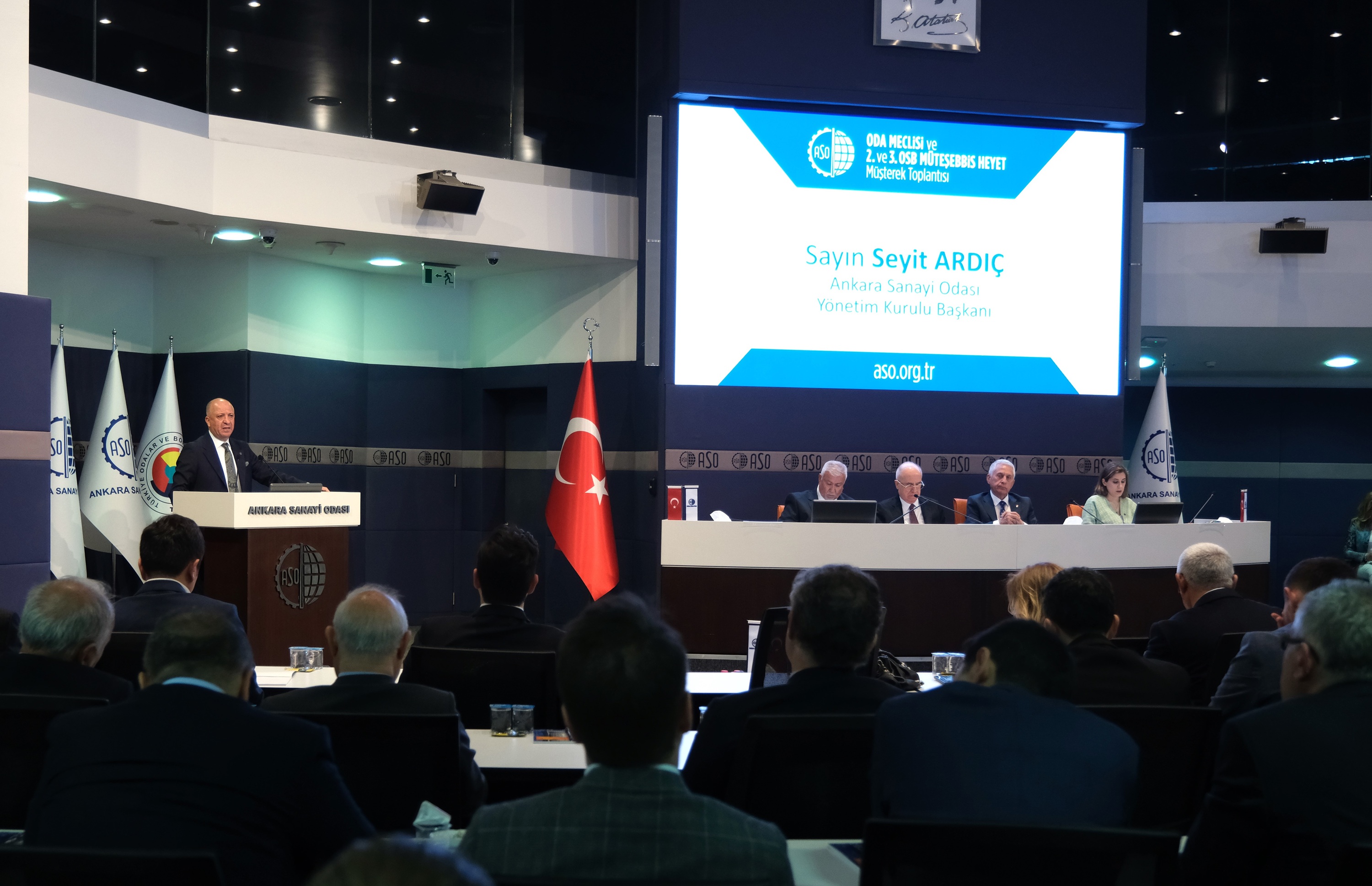
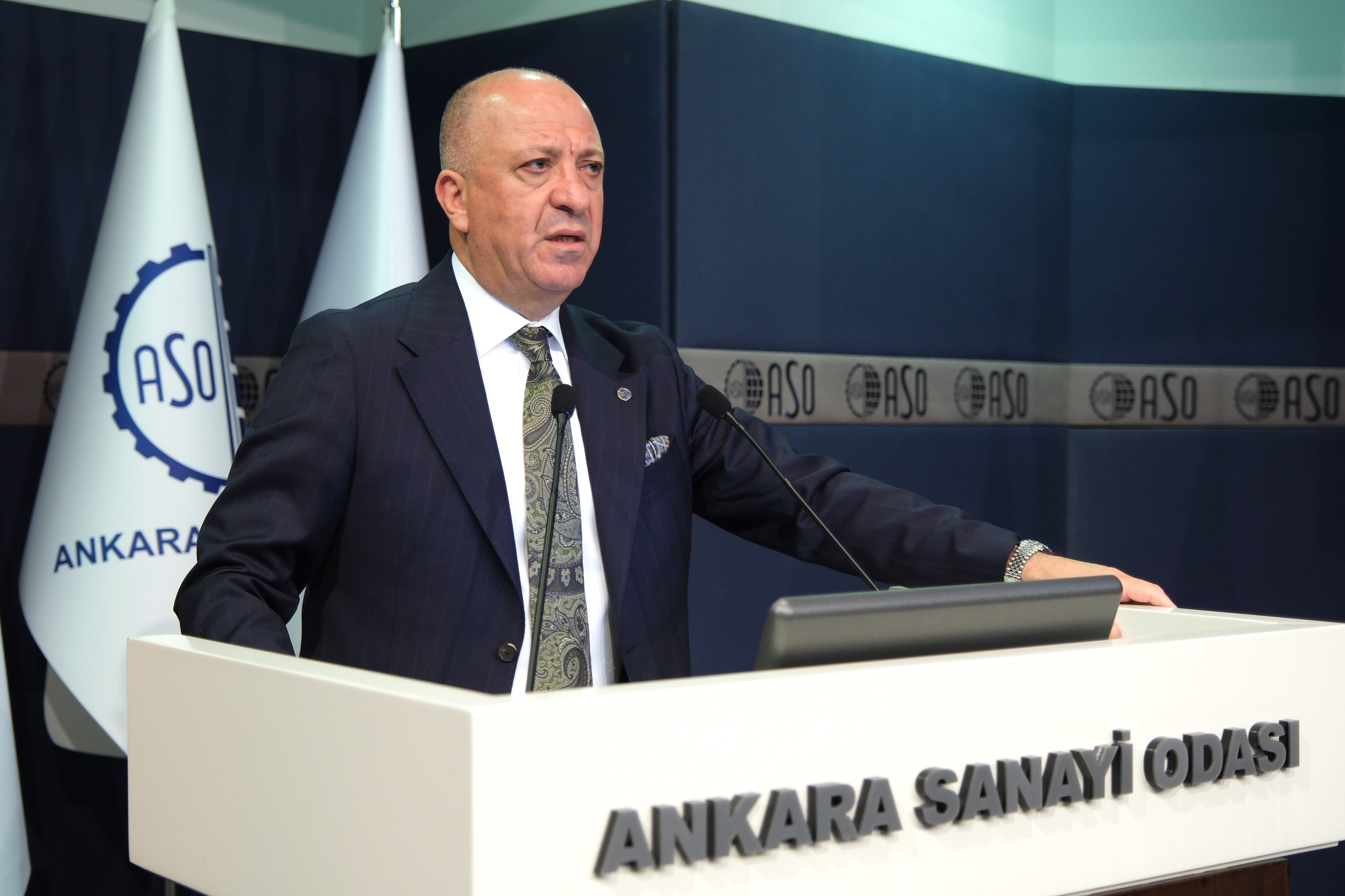
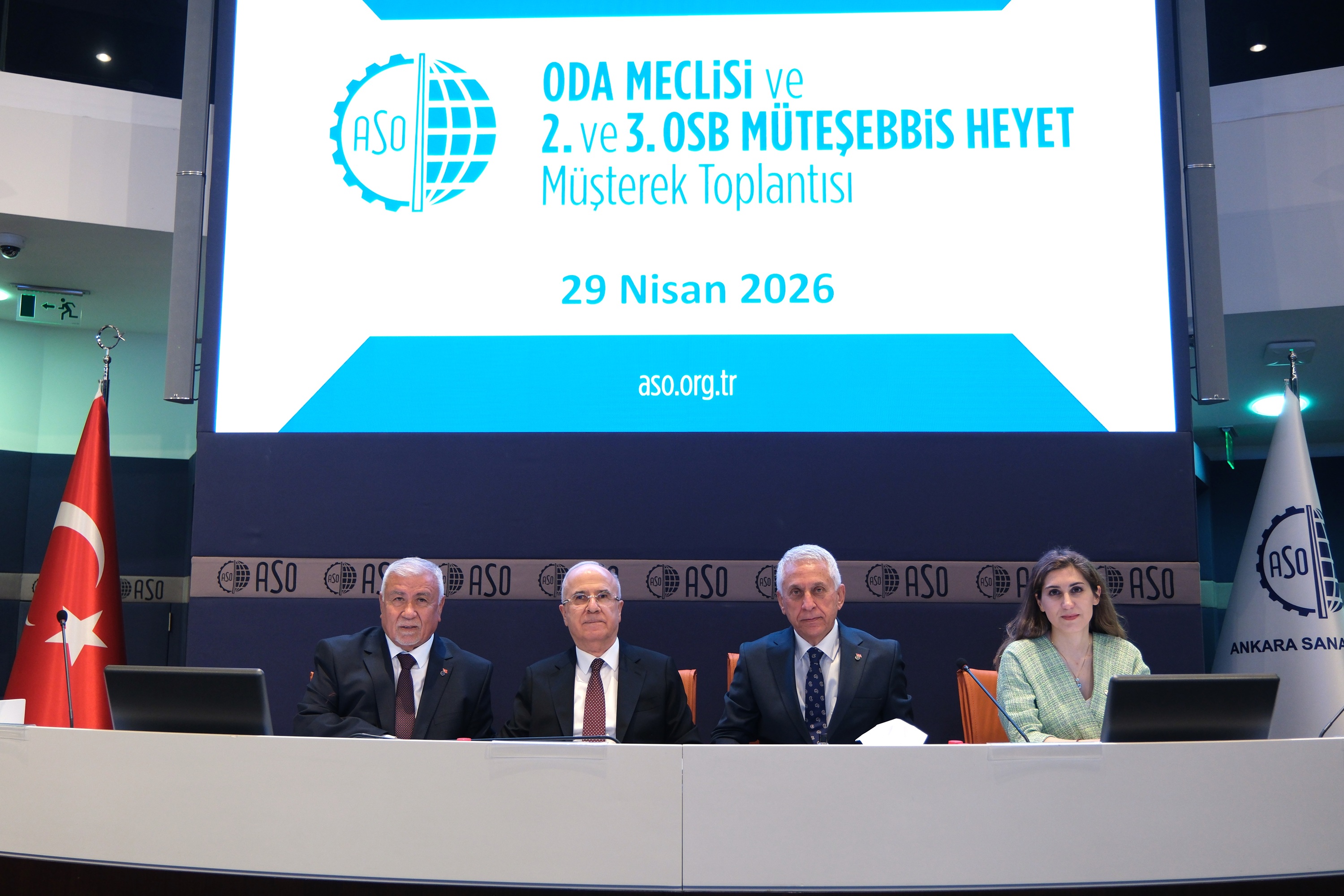
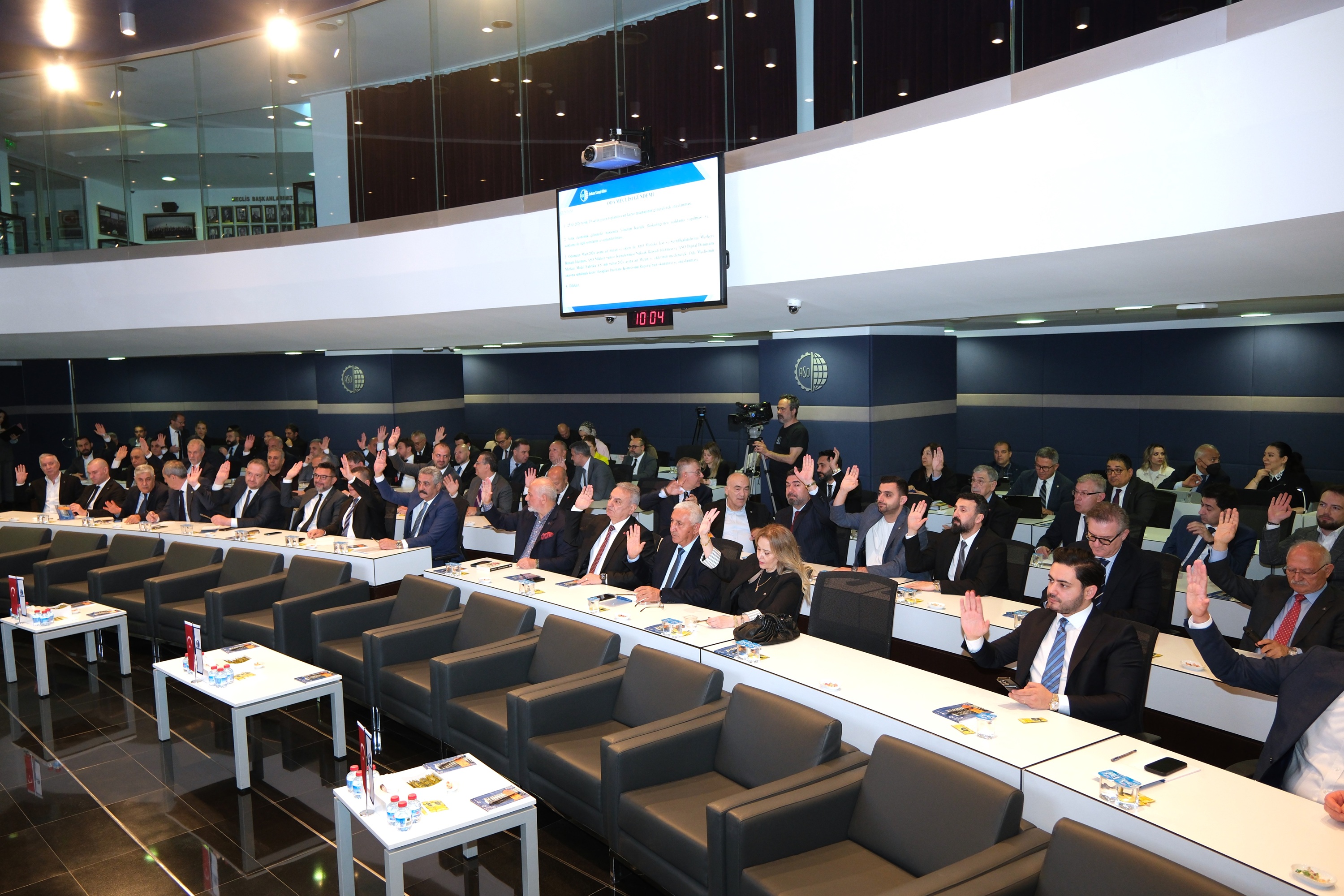
The April Assembly Meeting of the Ankara Chamber of Industry (ASO) was held under the chairmanship of ASO Assembly President Celal Koloğlu. Speaking at the opening of the meeting, ASO Chairman Seyit Ardıç evaluated the effects of global developments on the economy and shared the risks, opportunities, and solution proposals facing Turkish industry.
“Industry is the lungs of the economy. If industry loses its breath, investment appetite declines, production slows, and the foundations of growth weaken. The fight against inflation will certainly continue, but this struggle must be carried out without choking production or weakening industry,” said President Ardıç, while also sharing policy recommendations and strategic priorities aimed at strengthening production.
ASO President Seyit Ardıç began his speech by emphasizing the significance of the April 23 National Sovereignty and Children’s Day, which was celebrated with great enthusiasm the previous week.
“At a time when wars and uncertainties surround our geography, April 23 once again reminds us how valuable democracy and national sovereignty are,” said President Ardıç, adding, “These values constitute the strongest foundation upon which our industry and production power rise.”
President Ardıç stated that today’s agenda for industrialists is not merely producing, but also sustaining production at competitive costs, accessing financing, finding qualified labor, and being able to foresee the future.
“Production continues in our factories despite difficult conditions; however, conditions are becoming increasingly more challenging each day,” he said.
“THE RULES OF THE GAME HAVE CHANGED”
Drawing attention to the fact that the global economy is moving through a period of permanent turbulence, President Ardıç stated that geoeconomic conflict stands out as one of the most serious short-term risks.
“In this era, the winners will not only be countries that produce, but also those that establish supply security, adapt rapidly, attract talent like a magnet, and generate technology. In such a world, we must learn to live with shocks, manage uncertainty, increase resilience, and transform our strategic position into an advantage. Because the rules of the game have changed,” he said.
“TÜRKİYE IS ONE OF THE COUNTRIES THAT CAN STAND OUT”
President Ardıç emphasized that this period presents not only risks but also significant opportunities for Türkiye:
“In geographies where regional conflicts intensify, capital seeks safe havens, supply chains are rebuilt, and investment flows shift direction. Türkiye, with its geographical location, strong production infrastructure, broad market access, and qualified human resources, is one of the countries that can stand out in this new era.
Transforming this potential into a lasting advantage is directly linked to the rapid implementation of structural reforms, as well as our effectiveness, visibility, and diplomatic strength on the international stage.”
“DIPLOMATIC POWER ALSO DETERMINES THE DIRECTION OF TRADE”
Stating that Türkiye is assuming a more active and influential role on the diplomatic stage, President Ardıç noted that the 5th Antalya Diplomacy Forum is a concrete example of this.
Emphasizing that the forum’s theme, “Designing the Future and Addressing Uncertainty,” aligns directly with the industrial agenda, Ardıç continued:
“In today’s world, not only production power, but also diplomatic power determines the direction of trade. Countries that are strong diplomatically are able to shape the rules of global trade and direct its flow.
On behalf of our industrialists, I would like to express our gratitude to our President Recep Tayyip Erdoğan, who has led the Antalya Diplomacy Forum to become an increasingly influential platform on the global agenda each year, as well as to our Minister of Foreign Affairs Hakan Fidan and our esteemed diplomats.
A strong industry supports a strong foreign policy, and a strong foreign policy strengthens the hand of industrialists in global markets.”
President Ardıç also emphasized that capital flows toward geographies that have proven their reliability, noting that Türkiye is the country in its region that provides this trust in the most institutionalized manner.
“Our strong production infrastructure, industrial experience, and qualified human resources make our country one of the most attractive investment destinations,” he said.
“ANKARA IS ONE OF EURASIA’S MOST RELIABLE INVESTMENT CENTERS”
President Ardıç stated that Ankara stands out as a strategic city where production, knowledge, and technology are integrated.
“Our strong organized industrial zones and technoparks, together with our established universities and research infrastructures, create an effective ecosystem. High value-added R&D and product development capacity — from defense industry to information technologies, from advanced machinery technologies to healthcare technologies — is concentrated in Ankara.
With the expanding flight network of Esenboğa Airport, our potential has been activated. Taken together, Ankara is not only one of Türkiye’s, but also one of Eurasia’s most reliable investment centers,” he said.
Calling on international investors, President Ardıç stated:
“In the geography where risk is most intense, Türkiye is the country where trust is strongest; and within Türkiye, the heart of this trust is Ankara.”
President Ardıç emphasized that strong preparation is necessary for opportunities and potential to become reality:
“There is a need for a holistic approach that improves the production environment, increases investor confidence, facilitates access to financing, strengthens logistics infrastructure, and prepares industry for the competitive conditions of the new era.”
“WE, AS INDUSTRIALISTS, ARE STRUGGLING TO BREATHE”
Evaluating the current state of industry in Türkiye, President Ardıç said:
“There is a very clear reality before us. Unfortunately, we industrialists are struggling to breathe.”
Pointing out that annual inflation, which stood at 38.21 percent in June 2023, declined to 30.87 percent as of March 2026 — corresponding to a decrease of 7.3 percentage points — President Ardıç noted:
“During the same period, pressure on the real sector did not ease; on the contrary, it began to be felt even more severely in many areas.”
President Ardıç continued:
“The indicators clearly reveal this reality. We look at industrial production — momentum is weak.
We look at the Manufacturing Purchasing Managers’ Index — it remains below the threshold value. We look at the capacity utilization rate — it is below desired levels. We look at the real sector confidence index — it is still cautious.
Whichever indicator we examine, we receive the same answer: while some macroeconomic indicators show improvement, the production side has not yet been able to breathe. More importantly, this process has imposed a burden on the real sector far beyond what it can bear.
Industry is the lungs of the economy. If industry loses its breath, investment appetite declines, production slows, and the foundation of growth weakens.
A country like ours, with limited oil, natural gas, and energy resources, has no choice but to produce in order to develop. We are a country that achieved growth through production. From now on, we must continue producing with the same determination.”
“THE FIGHT AGAINST INFLATION MUST BE CARRIED OUT WITHOUT CHOKING PRODUCTION OR WEAKENING INDUSTRY”
President Ardıç stressed that, from an industrial perspective, not only the decline in inflation but also the cost at which inflation declines is equally important.
“This decline is occurring alongside high interest rates, tight credit conditions, slowing domestic demand, and increasing financing costs, while industrial added value remains limited. We are paying the price of high inflation with high interest rates, and the price of high interest rates with production losses.
As the burden on the real sector becomes heavier, the supporting pillars of the economy are also wearing down. It is not possible to achieve price stability without strengthening production,” he said.
President Ardıç noted that although slow progress is being made toward price stability, this improvement has not yet been reflected in the real sector.
“Our stance on this matter is clear: the fight against inflation will certainly continue. However, this struggle must be carried out without choking production or weakening industry. Because Türkiye’s real strength lies in reviving production,” he stated.
President Ardıç also drew attention to rising electricity, natural gas, raw material, and intermediate goods costs in industry.
“The structural dependence of our production structure on imported energy and imported intermediate goods transforms every exchange rate fluctuation into a multiplied cost shock.
The issue is not merely rising energy prices. The real problem is that these increases erode the competitiveness of industrialists, weaken exporters, and make the fight against inflation even more difficult.
Every increase in energy costs is not just a rise in bills; it is a multidimensional pressure directed at our production power, investment appetite, and economic resilience,” he said.
“THE RULES OF THE GAME SHOULD NOT CHANGE AFTER THE MATCH HAS STARTED”
President Ardıç stated that industrialists have shown strong interest in renewable energy investments and taken significant steps in solar energy, adding that these investments have positively contributed to electricity generation capacity.
However, he warned that sudden and unpredictable policy changes risk undermining this positive momentum. In particular, he noted that the transition to the “hourly offsetting” system in unlicensed electricity generation has weakened the feasibility of existing investments, shaken investor confidence, and created uncertainty in industrialists’ future plans.
“This situation directly affects not only individual investment decisions, but also continuity of production, employment, and our international competitiveness.
More importantly, such regulations risk contradicting the strategic objectives we have established as a country. While encouraging renewable energy investments, taking steps that undermine the economic sustainability of these investments raises serious concerns regarding policy consistency.
The rules of the game should not change after the match has started.
I would especially like to emphasize that we believe the current legislation regarding hourly offsetting should be reconsidered and reviewed with a holistic perspective in light of the needs of our industry, national objectives, and investment security.”
President Ardıç also addressed another critical risk area facing industry: the deterioration in financing structures.
He pointed out that the tight monetary policy and high Turkish lira interest rates implemented during the disinflation process have driven companies toward foreign currency financing, which they perceive as more accessible.
“The foreign currency position deficit of companies, which stood at USD 74 billion in June 2023, reached USD 200 billion as of March. This shows that the real sector has been forced to borrow more heavily in foreign currencies over the past three years,” he said.
“INDUSTRIALISTS SHOULD GROW THROUGH PRODUCTION POWER, NOT FOREIGN CURRENCY DEBT”
President Ardıç warned that industrialists currently face cost pressures and may later confront exchange rate shock risks if export markets contract and foreign currency revenues decline suddenly.
“Industrialists should grow through production power, not foreign currency debt. A balance sheet surrendered to exchange rate risk can neither sustain investment nor expand production.
The solution is to establish a financing and production structure that does not force industrialists into foreign currency debt,” he said.
President Ardıç emphasized the importance of expanding affordable and accessible Turkish lira credit opportunities.
“Exchange rate risk hedging instruments should be made more effective. Production policies that reduce dependence on imported intermediate goods must be strengthened,” he added.
“MANY COMPANIES ARE FORCED TO EXPORT ALMOST WITHOUT PROFIT JUST TO MAINTAIN THEIR MARKETS”
President Ardıç stated that when exchange rate movements fail to keep pace with rising production costs, exporters’ profit margins rapidly narrow.
“Today, we are faced with a situation where exporters are prioritizing maintaining their presence in foreign markets rather than generating profits.
At this stage, many companies are forced to export almost without profit in order not to lose their existing markets.
When the European Union’s Carbon Border Adjustment Mechanism, new sustainability reporting obligations, and supply chain auditing regulations are added to this picture, conditions become even heavier.
Exporting today no longer means simply producing; it means passing tests of compliance, carbon footprint management, and traceable supply chains.
In other words, today’s exporter competes not only with rivals, but also with regulations, trade corridors, and climate policies.
A strong green transformation infrastructure, accessible export financing, and a more effective foreign trade policy will keep our industry standing in this race. Because exporting today is not merely shipping products; it is the ability to defend every stage of production on the basis of transparency, documentation, and measurement.”
President Ardıç also noted that they closely follow the steps taken by the government to strengthen industrialists’ investment capacity.
He stated that the “Türkiye Century Strong Investment Center Program,” announced by President Recep Tayyip Erdoğan, is an extremely strategic step toward Türkiye’s goal of becoming a center for investment, production, trade, and finance.
President Ardıç thanked President Erdoğan for the support provided to industrialists, exporters, entrepreneurs, and investors, adding:
“I wish that the announced regulations will bring prosperity to our country’s economy, industry, and exports.”
“LET US NOT ONLY SAVE TODAY; LET US BUILD THE COMPETITIVENESS OF THE FUTURE STARTING TODAY”
President Ardıç stated that it is not sufficient merely to identify the current problems facing industry and outlined ASO’s four main demands from policymakers and implementers:
“First: a disinflation process that protects production and exports.
Second: accessible and predictable financing that does not increase exchange rate risk.
Third: a consistent technology policy that connects R&D to products, products to production, and production to exports.
Fourth: a determined action program that will make artificial intelligence, green transformation, and advanced technologies the new leap areas of Ankara’s industry.
Because the issue of this era is not merely growth, but resilient and sustainable growth. It is about producing in a high value-added, technological, and sustainable manner.
Let us not only save today; let us build the competitiveness of the future starting today.
This Assembly represents the collective wisdom of Ankara’s industry. In this hall, not only sectors come together, but also experience, labor, memory, and ambition for the future.
Our duty is not merely to manage the present day, but also to determine direction.”
At the end of his speech, President Ardıç also addressed May 1 Labor and Solidarity Day, emphasizing the importance of labor and production, and congratulated all workers — especially industrial employees — on May 1 Labor and Solidarity Day.